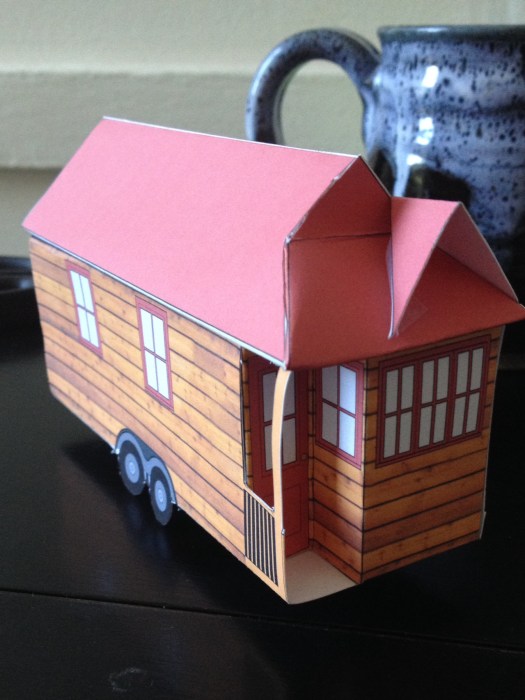
Tiny House Build List

Posted on August 1, 2014

It’s a lot of work building a house, and I say this while still in the design stage.  I think I know what we’re getting ourselves into.  That doesn’t make it any less intimidating.

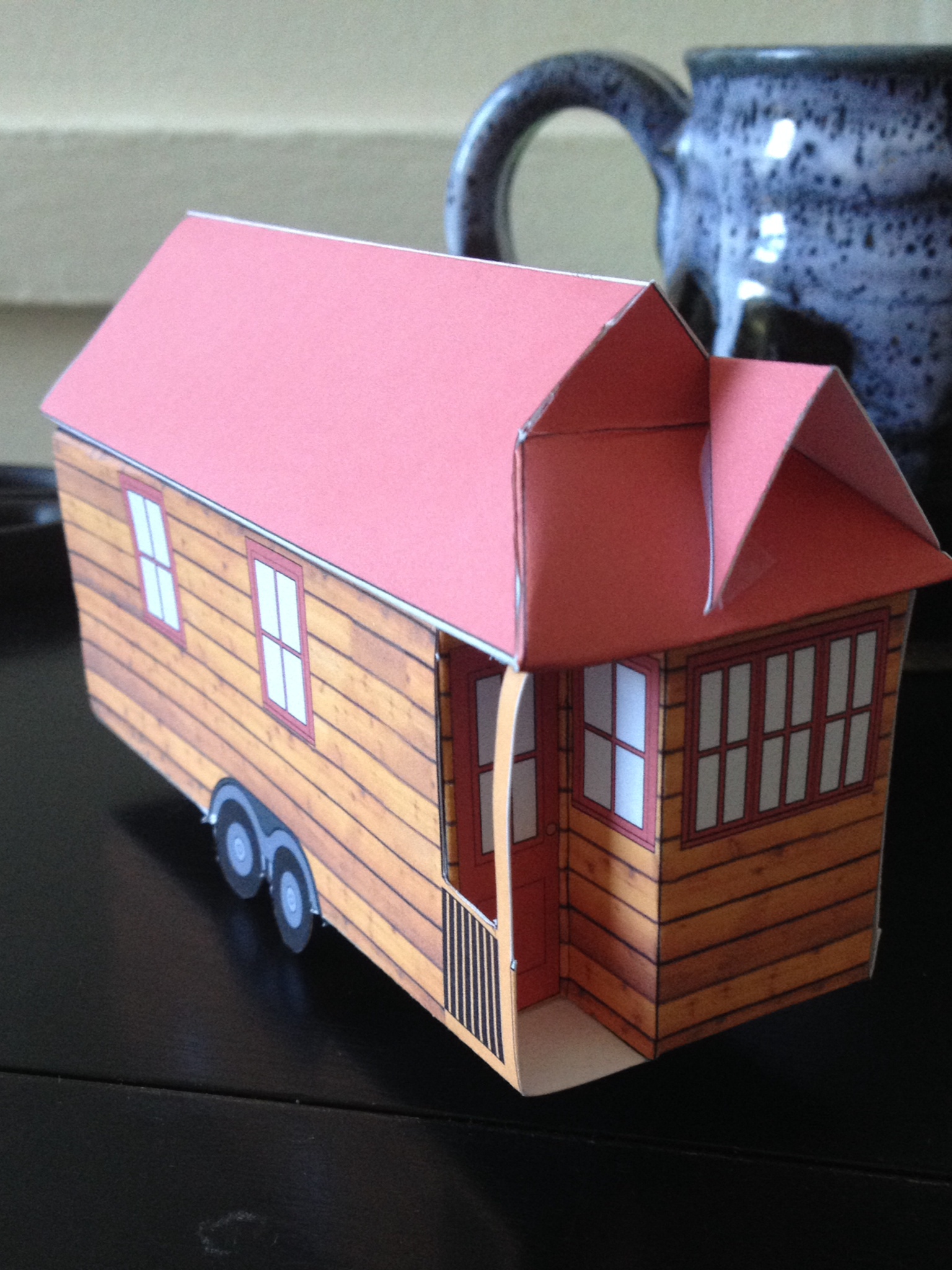
Meanwhile, as we’re planning we’re coming across products we like and think we want to use.  I figured I’d store this information on a blog in case it helps anyone else building a tiny house.  I’ll keep things updated as our wants and needs shift.

Architectural

  • Refrigerator (looking at these two)
  • Induction cooktop (something like this)
  • Oven
  • Marvin aluminum-clad or fiberglass windows
  • Interior wall finish
  • Exterior siding

Structural

Mechanical

Electrical

  • solar panel system
  • RV hookup

Plumbing

Fire Protection

  • Carbon monoxide detector

Note: I was not compensated in any way to endorse these products.  This list is a function of our own research.


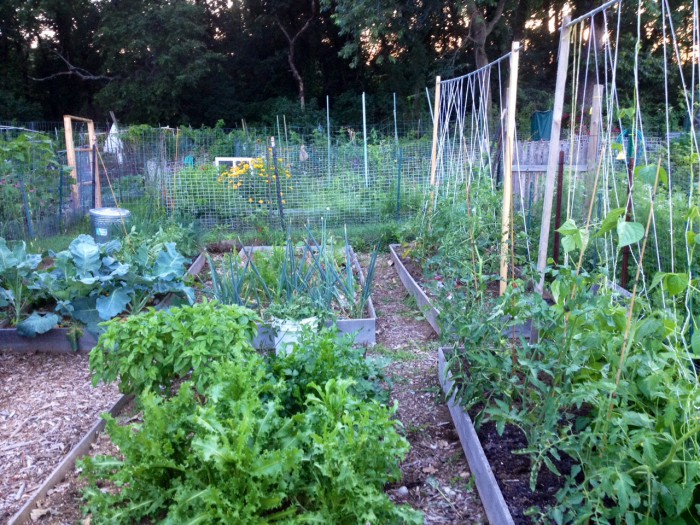
I tied up those darn tomatoes

Posted on July 25, 2014

photo

It took me forever.  Not because it was hard, or needed special equipment that I didn’t have.  It’s because I formed a mental block against the task.  I think we all have those tasks, the ones where it feels like you’re not making any progress because you’re mired down in it.  You know — in the weeds.  And then you put it off because you feel horrible, and the task grows to monstrous proportions in your head, and then you put it off some more.

I girded my loins and tied them up, trimmed the extraneous stems, and pulled the particularly egregious weeds (I left the rest where they were until another time.  I call it casual weeding).  The tomato plants look good now, like they will produce some happy fruit.  It was only an hour’s work.

photo(1)

When I got home and told Seth about it, he nodded.  We had just had a conversation that week about the kind of task that feels much more reasonable with another person around to encourage you, help, and commiserate.  For him, it was weeding a 200 foot long bed of tomatoes in 95 degree weather when no one else was on the farm.  It was daunting, he said.  He was discouraged, he said, frustrated and angry.

And then lo and behold, Tara from Going Slowly wrote a blog post about the same thing.

I’m starting to believe that we should all be pitching in on these in-the-weeds projects. I’m starting to believe that the community is what makes farming great.

Gimme gimme gimme gimme garlic tonight!

Posted on July 20, 2014

Seth has been teasing me all week with pictures.  It’s his daily ritual.  I ask him how his day is going, and he responds with a photo of fresh tomatoes, or mini sunflowers, or a pile of beets.  This week it was garlic.  “I don’t know what we’re going to do with it all.  We’ve got no place to cure it,” he told me Friday night, after I asked him about his photo of the day.  I nodded absentmindedly.

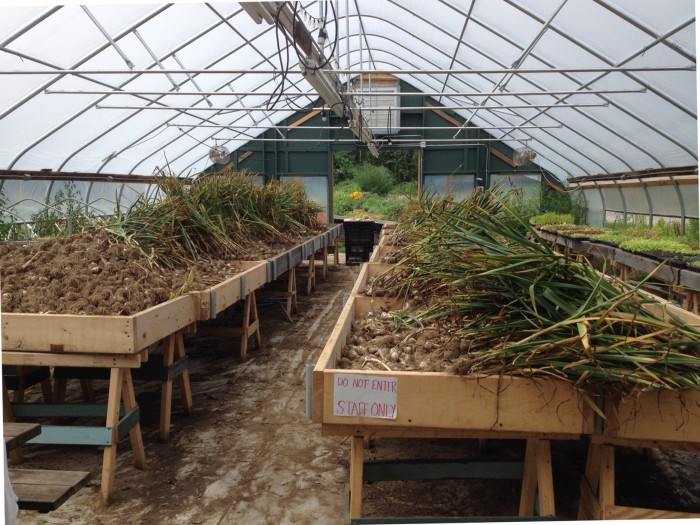
When I went to the farm this morning, this is what I saw:

photo 1

“Oh, did I tell you?  We picked 2500 pounds of garlic in two days,” Seth called me to as he pulled a farm cart over to the zucchinis.  Huh.

The garlic will dry for awhile in the greenhouse, mounded up on the planting tables. Then the farm crew will lop off the dry tops and transfer the bulbs to the root cellar.  The darkness will keep them from sprouting.  When it’s time for CSA members to pick up their shares, Stearns will give them about half of the harvest, and keep the rest for next year’s crop.  The beauty of the farm at work, friends.

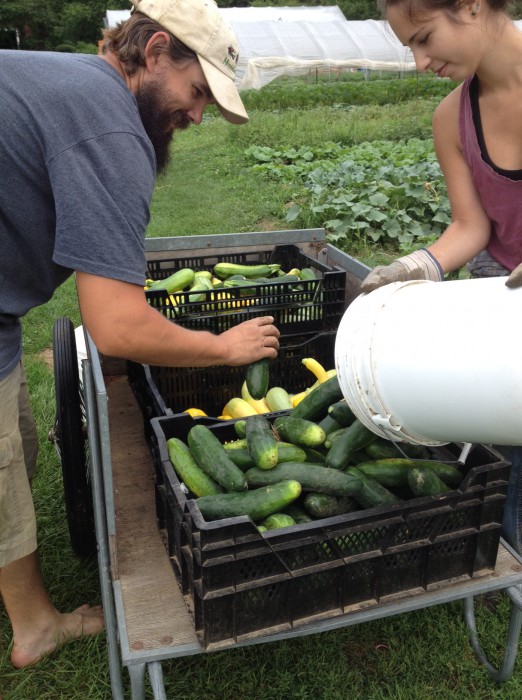
Meanwhile, It’s high July which means zucchini, squash, and cucumbers are dying to grow into baseball bats.  Though the farm was closed, Seth, another volunteer, and I went in today to pick any curcurbits that were thinking about taking off over the next two days.  This way when the farmers get back to work on Tuesday they aren’t confronted with Monster Zucchini or Patty Pan of Doom.

photo 3 photo 2

About 100 lbs. of zucchini and squash, and about 50 lbs. of cucumbers.  Not bad for a few hours of work.

The farm is running along otherwise.  Some rows have thigh-high weeds, some look picture perfect and ready for a Martha Stewart spread.  And some have disappeared.

photo 4

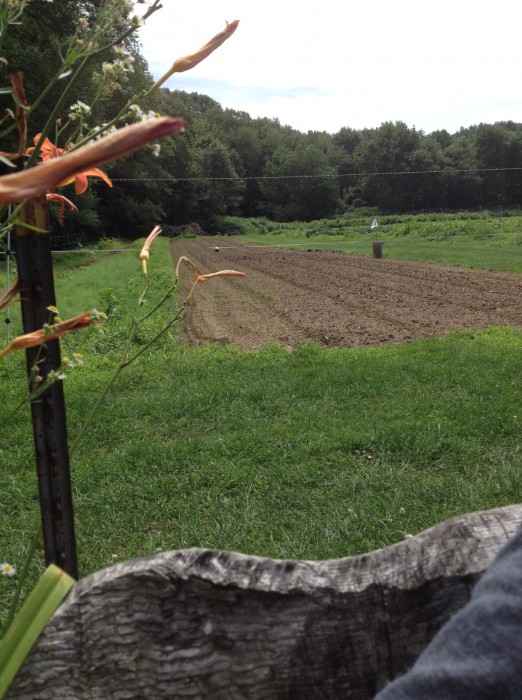
This used to be several rows of strawberries.  Now it’s a plot of dirt.  Strawberries are perennials, but apparently they drop off in production after the third year.  For efficiency, the farmers rip up the beds after three years and put in another round of plants to start the cycle anew.  I guess you really do learn something new every day.

Why tiny?

Posted on July 13, 2014

photo

I put up an About Us page this week, and it goes into our goals a little bit — one of which is a tiny house. So why do we want to go tiny?

Well, I’ll tell you. Way back in August 2009, we moved to an apartment in a house in Dover, New Hampshire. It wasn’t a nice house by any stretch of the imagination. It was poorly kept up, though the owner assured us that its flaws were cosmetic and he’d fix them right away. We dismissed a lot of the issues as the quirks of an old house. We were young, flush with excitement over being newlyweds and new dog owners. We looked at it on a beautiful bright day. With the sun streaming through the windows, we decided to go for it.

Within weeks of moving in, I began to get migraines every day. Now, I’ve always gotten migraines. I had a few as a kid, none through my teens, and once I hit age 20, they came regularly. They weren’t terrible in that medicine could take them out quickly. They were once a week. They were manageable.

This house made the migraines unmanageable. I’d wake up groggy and unfocused every morning, and by mid-afternoon I’d have a migraine. Every. Day. It didn’t sink in that this was connected to the house. When you’re in the middle of a migraine, analytical skills are not your strong suit — at least not mine. And Seth was in a grad school program with almost no time to think between classes and student teaching. And we were young.

Over the months, my health issues compounded. I developed food sensitivities like no tomorrow. I became sensitive to chemicals, lights, sounds, smells. I was dizzy every day. I was drinking upwards of 3 gallons of water every day because if I became thirsty, that day’s migraine would be unstoppable.

Finally, we realized that this was because of the house. That the mold that was on the bathroom ceiling was actually everywhere — clogging the bathtub drain, growing on our things in the closets, growing on the window sills. The front door was so saturated that you could press on it and your hand would come away damp. And so we began the process of leaving.

We got rid of everything that could not be soaked in vinegar, which meant our furniture, our books, our papers and pictures and paintings and electronics.

As we chipped away at our belongings and did more research on mold, we discussed what made life worthwhile. Because of the migraines and food issues, I couldn’t go out with friends. I could barely travel. My work performance suffered and then fizzled out. I couldn’t listen to music. Shopping made me ill from the amount of scents and chemicals in new products and stores. If the dog barked, I’d be down for the count. The migraines limited so much of my life. I realized I didn’t want to spend what time I had doing a job I didn’t like, working long hours to pay for a big house that I never spent time in, full of things I had no time to enjoy.

Meanwhile, Seth had come to learn that he didn’t enjoy being a workaholic. That friends and travel and good food were more important than the Standard American Lifestyle. That if you didn’t take care of yourself, you could end up a shell of a person.

Enter the tiny house.

A tiny house is small. That means less time spent cleaning. A tiny house has minimal storage. That means there’s no use shopping every weekend. A tiny house can be on wheels. That means that you can bring your home with you when you travel to out-of-state family and friends. And more than anything else, a tiny house is relatively inexpensive. That means we could control every step of the process, every piece of material that goes into building, and never have to wonder about if our home is full of chemicals or mold.

We moved out of the moldy house in January 2011 — a little under a year and a half — with a pickup truck’s worth of clothing and kitchen supplies. We moved to a clean apartment where my family gave us a card table, folding chairs, and an air mattress. It sounds bleak, but it was heaven. It was a relief to have nothing, so we could focus on ourselves and our health.

Unfortunately, it was not as easy to give up the side effects from living in a moldy house. I still have a ridiculous amount of food and chemical sensitivities. I still get migraines, but half as many (about 1-4 times per week). But I don’t wake up groggy. I can listen to music again. Seth, who had developed some sort of walking pneumonia, regained his usual vigor. We have the time and energy to really push toward our goals.

We’re looking forward to a tiny house so that we can live in a way that makes sense to us and for our situation. We want to pull back from the rat race. Some people do that by opening their own businesses, some people move to Europe. This is our way.

A natural tick deterrent? Sure thing.

Posted on July 11, 2014

photo(1)

Lily has already had Lyme Disease once.  And since Massachusetts is a high risk state for Lyme Disease, you can bet your sweet bippy we were concerned about Lily spending all day outside hunting through the brush for chipmunks and mice (she still hasn’t gotten the hang of rabbits).  

I lost faith in topical chemicals after Lily got Lyme Disease.  After all, what good is a chemical that you put on your dog every month that doesn’t deter ticks, and doesn’t kill them until they’ve been attached for 24 hours?  Lyme Disease can be transmitted starting 18-24 hours after a tick bites.  So there’s a window of opportunity there, or a chance for the ticks to drop off and make their way to one of the cats, or Seth.  Or me.  Shudder.  

When Lily first started at the farm, we pulled a minimum of 4 ticks off her per day.  And that’s just the big ones.  I don’t know how many of those poppy-seeded sized ones were on her.  On the day we removed 9 ticks, I resorted to drastic measures — if by “drastic measures” you mean “homeopathy.” Yessirree-bob.

photo

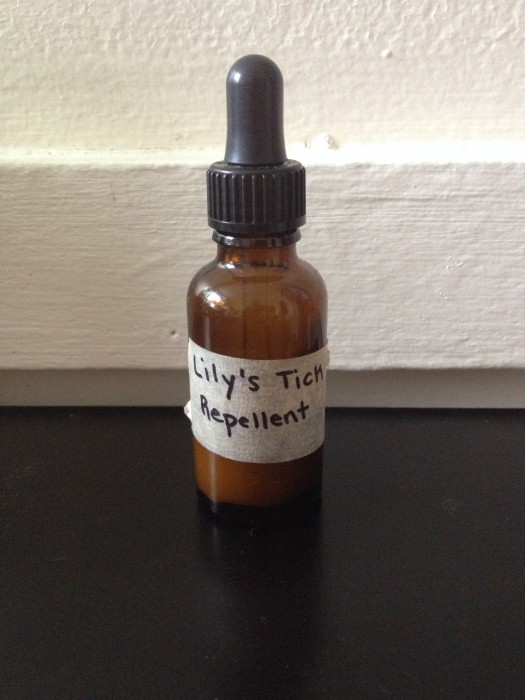
I heard about using rose geranium essential oil on dogs for tick deterrent from somewhere on the internet and decided to give it a shot.  We had all natural tick deterrent spray from our favorite soap seller.  It wasn’t great, to tell you the truth, and LIly would run from the sound of the spray bottle.  But it had rose geranium oil in it, and it was in our cupboards, and gosh darn it we would use it.  

I began by putting a few drops in between her shoulder blades and above her tail every day before work.  The results were immediate: no ticks on Lily.  None.  Not one for two weeks.  Then one day she went for a swim, and I pulled two ticks off her that night.  Since then we’re down to about one tick per week or less, usually on days she cools off in the stream by the farm.

I’ve heard that straight essential oil works better than what we’ve got, even if your dog goes in water.  I’m assuming it’s because the spray is diluted in water and essential oil is just oil.  And since you’re dropping it right on your dog’s sebaceous glands (which then do the work of spreading things around), the glands distribute the oil better than water.  Rest assured we’ll be switching to the essential oil once our supply of tick spray runs out.

 I’m no expert, but I can tell you that the math here is amazing.  Essential oil = very few to no ticks.  And this is after 6 weeks or so.  So thank you very much internet, we’ll take your essential oil and use it well.

Sick sick sick

Posted on July 7, 2014

I was hoping to have a new post for you about how I strung my tomatoes up on a tomato trellis — a new idea for us here.  And I would have talked about trimming the stems back, and all the things you talk about when you talk tomatoes.  I know how to talk tomatoes, my friend.

But instead, I’m here to tell you that I’ve been sick for the past two weekends — migraines and a bad cold, thrown in with a friend’s wedding that I had to attend and that left me tired.  This is what happens sometimes.  The work-life balance gets thrown out of whack, and I’m left with un-trellised tomatoes and a serious craving for garden work.  

On the bright side, I’ve been cooking up the meat that we got in our first meat CSA pickup.  We signed on for 35 lbs. (~16 kg) of meat per month from Chestnut Farms.  This month is a mix of pork, beef, and chicken, and let me tell you this: it is good.  I’m not a big fan of beef (give me lamb any day), but it’s still delicious, and the pork is ridiculously flavorful.

What would you do with a big hunk of pork shoulder?  Pulled pork?  I can’t tolerate the amount of fat in shoulder, which means I don’t cook it often so I’m left high and dry here.  No pun intended.


This Week on the Farm: Summer Solstice

Posted on June 22, 2014

20140627-185557-68157174.jpg

Five years ago, Seth and I got married.  We picked the first day of summer so we could use the longest day every year to celebrate ourselves and the outdoors.  (Bee tee dubs, it was one of the few really great decisions we made over the wedding season.  Why are US weddings so bloated and expensive?  I digress.)

When I tell my coworkers we celebrated this year’s anniversary by working on the farm, they give me a funny look.  Don’t judge my people too harshly — they all live and work in Boston and the surrounding area.  They are not rugged farmers and volunteers.  Very few have pulled fresh vegetables from the ground, let alone recognized that farm food is far superior to restaurant food.

It was a standard day at Stearns.  I spent the morning weeding.  Neverending, I tell ya.  One short row of carrots lasted the entire morning.

Seth  fish fertilized every brassica in sight.  He and the other assistant grower tag-teamed driving the tractor and spraying the fish.  As they worked, they shouted to each other their conversation, and everyone on the farm listened in.  Those voices carry!  I’ve been teasing Seth about it as much as possible.  They were  just comparing notes about the latest EMass CRAFT session, nothing gossipy, but I get so few chances to pick on my partner in crime that I take them when I can get them.

20140627-185552-68152060.jpg

After lunch, the volunteers and work-for-shares left.  Seth and I began dosing each eggplant with a spoonful of epsom salt — “to sweeten them up,” Seth said.  At one point, I stood upright to stretch my sore back and looked around.  We were alone in the field.  The dog was napping in the shade from the cart that carried our bag of epsom salt.

“This could be ours,” I called to Seth.  “This is what it would be like if we were on our own farm.”

Seth looked around too.  We grinned at each other like two teenagers in love, and continued with our work.

20140627-185600-68160485.jpg

When it was time to go, Susan the farm manager sent us off with the first bouquet of flowers cut from at the farm, in honor of the first day of summer and our anniversary.  I love farm people.

Good luck at the garden, or maybe that’s just spring

Posted on June 17, 2014

2014-06-14 09.36.32

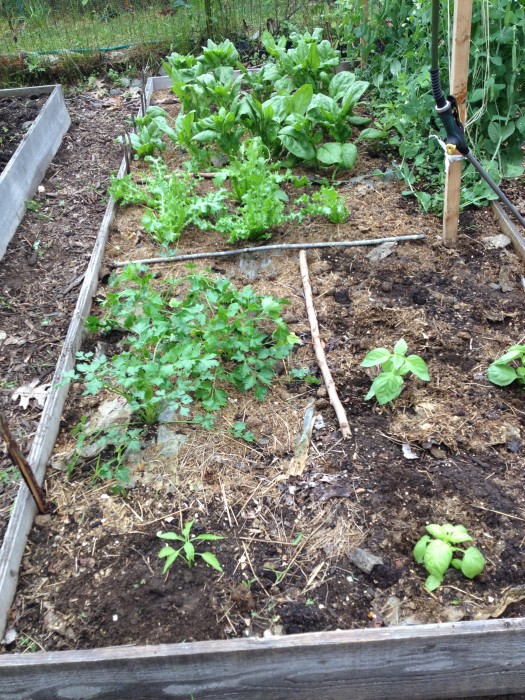
I haven’t been able to make it to the garden as much as I’d like.  This is iffy when it comes to gardening — I can’t be on the ground to monitor things.  Things like chasing off chipmunks, or pulling the weeds as they poke their heads out of the ground.  When I arrived at the garden this weekend, though, I was pleasantly surprised.  It looks as though the rainy week helped me out a ton. My broccoli thought maybe it would like to spring back.  The spinach took off, despite the leaf miner.  The tomatoes seem to be holding their own.  The curly endive is delicious, and WE HAVE PEAS.

2014-06-14 11.11.26

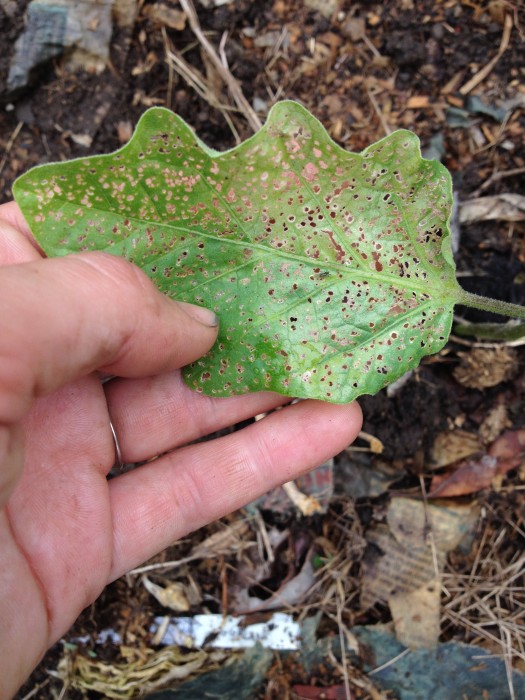
I can’t figure out what’s going on with the eggplant.  Maybe flea beetles?  I’m sure they’re being attacked because they are young and tender and… er… beautiful.  Row cover probably would have helped, but I didn’t get my act together in time.

2014-06-14 11.10.42

The hours flew by as I cleaned up and seeded most of my summer crops: green beans in the last bed, flowers everywhere, and cucumbers next to the tomatoes and garlic.  I planted my basil plants and my one little jalapeno, and transplanted some volunteer tomatoes out of the compost and into the last bed with the green beans.  We still have a huge to-do list, including setting up the tomato twining system, the green bean stakes, and finally fixing our garden gate.

2014-06-14 11.09.47

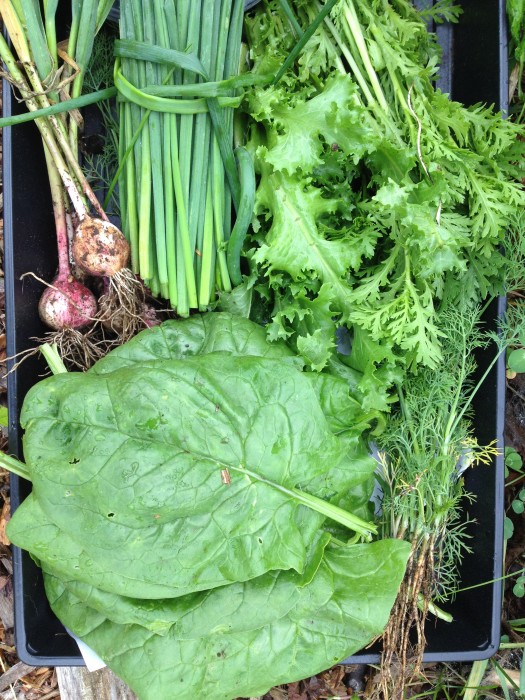
We got a nice little harvest of endive, peas, garlic, chives, a few onions, and  our next door gardener contributed some herbs from his plot.  I know you see spinach there, but I tossed most of it after watching a leaf miner wiggle its way around the leaf at breakfast the next morning.  Doesn’t seem to deter my plants though.  When I went back to the garden the next morning, the spinach sent up 4″ shoots overnight!  Looks like it’s thinking of bolting.

This week on the farm: a dog’s life

Posted on June 9, 2014

image

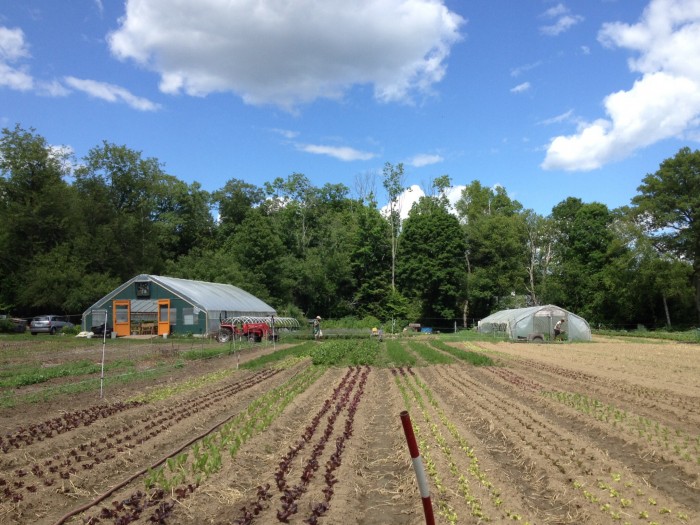
It was another bright, sunny day this weekend, and well into the 80s (that’s high 20s if you’re not in the US).  The farm is prepping for the first week of CSA pickups.  The lettuces are ready to pop, and you can see Kenneth harvesting Napa cabbages in the greenhouse on the right.  It was a beautiful day.  The only one to complain was the dog.

image

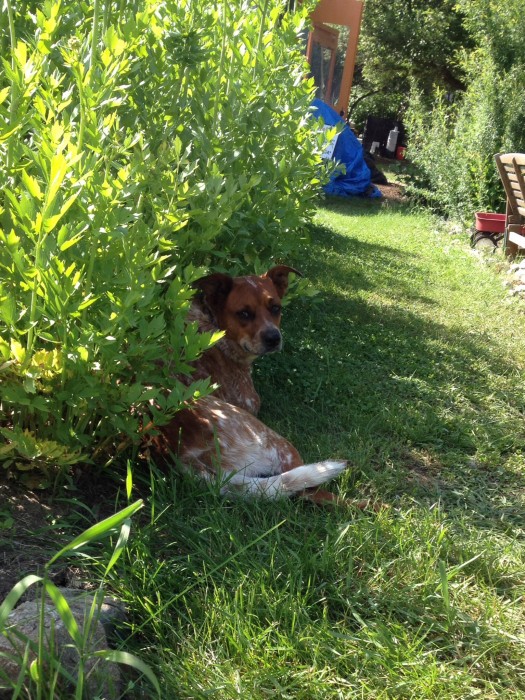
Not that I blame her for taking refuge in the shade from the lovage.  It’s too hot to be wearing a fur coat.

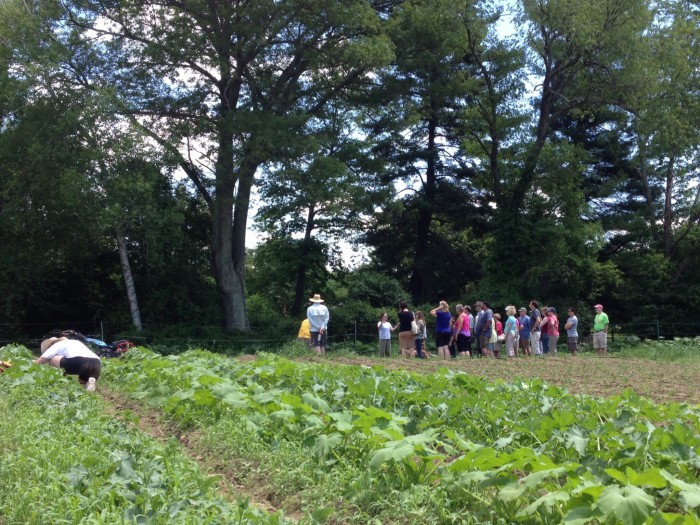
I don’t know if she was uncomfortably warm or glad to have me around, but the dog shadowed me for most of the day.  I spent the morning hand-weeding the cucumbers and squash with a couple of volunteers. Lily hunkered down in the paths until the farm manager came by with a tour group of this season’s new CSA sharers.  Then it was off to greet people.

image

As usual, everyone was thrilled to meet Lily.  Seth jokes that when he gets to work, everyone’s all, “Oh, hi Seth.  LILY! HI THERE, HOW ARE YOU SWEETIE PIE?”  It’s hard not to gush over the dog. I might be biased.

Lily and I took a long break at lunch.  While the others went back to mulching the paths between the tomato beds and weeding, I took Lily to the stream that runs along the farm’s perimeter.

image

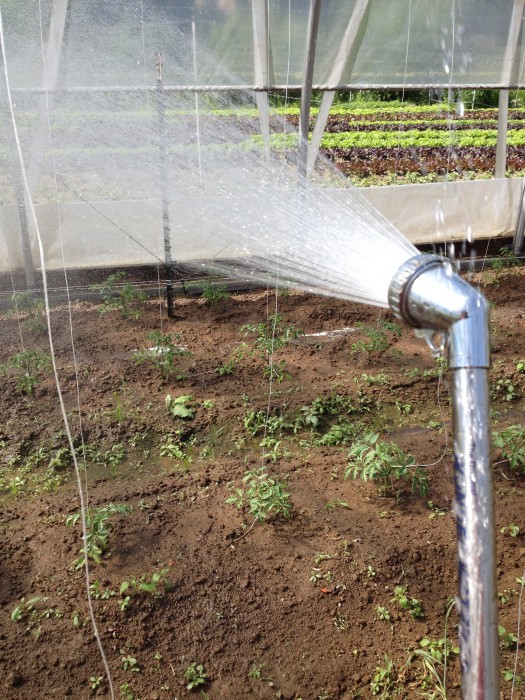
We rounded off the afternoon by watering the greenhouse tomatoes.  And by “we,” I mean me.  Lily is afraid of the sprayer.  Scary, no?

image

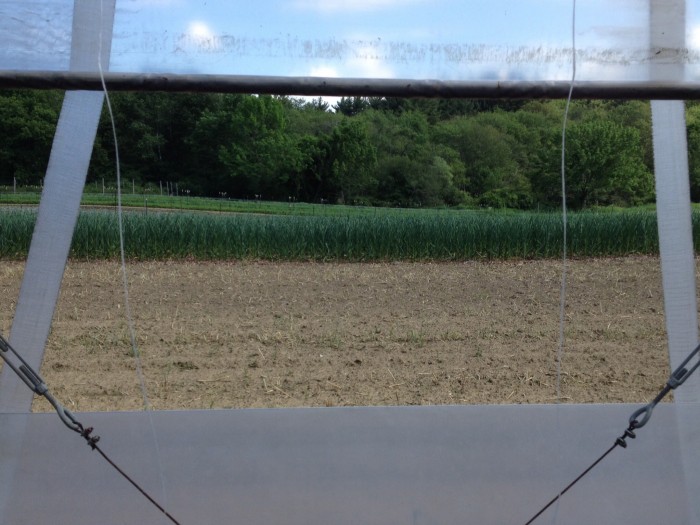
I like watering the greenhouse because it feels insulated from everything else.  Sounds are muted through the plastic walls, the sprinkler head leaks  so the water runs down your arms and cools you off, and there’s a breeze through the open doors and sides.  If you look out one way you can see the lettuces in their neon glory, and through the other is the field of lusty garlic.

image

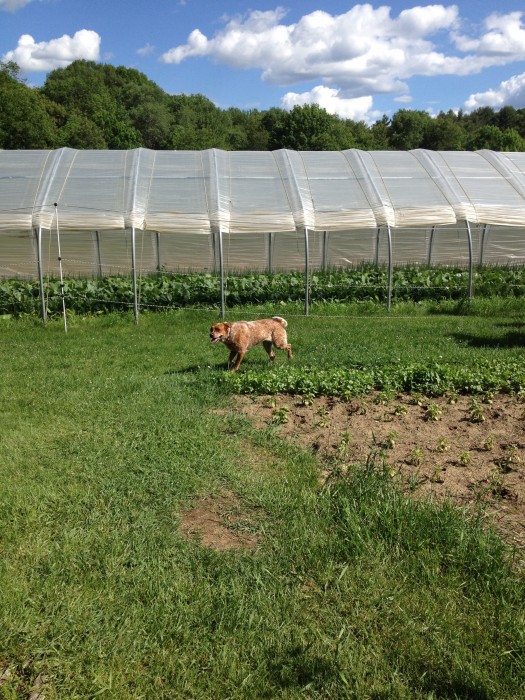
You wouldn’t think it would take that long to water 300 tomatoes — at least I didn’t — but I was in the greenhouse for close to an hour and a half.  After that, everyone cleaned up and called it a day.  Don’t let Lily’s expression fool you; she was devastated to leave.

image

Notice how she avoids stepping in the garden beds?  That’s hard work, not crushing baby plants.  But someone’s got to do it.

This week in the garden: pests

Posted on June 2, 2014

You know the rhyme that goes, “Mistress Mary, quite contrary, how does your garden grow?” If her garden is growing, what does she have to be contrary about?  I’ll tell you.  Pests.

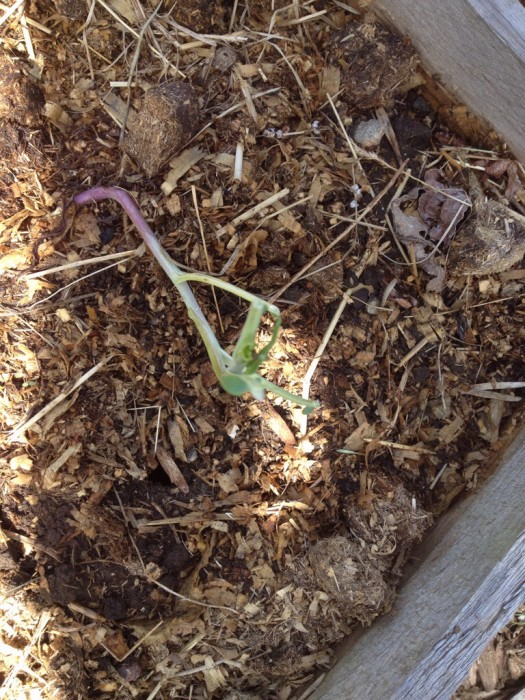
Something has been feasting on our vegetable seedlings.  The carrots and radishes are nonexistent, despite the steady rain we’ve had.  And take a look at the endive.

20140602-085343-32023597.jpg

These endives should be about 12″ in diameter now.  They are a measly 3″ across, with browned, chewed ends.  Most likely chipmunks.

20140602-085355-32035238.jpg

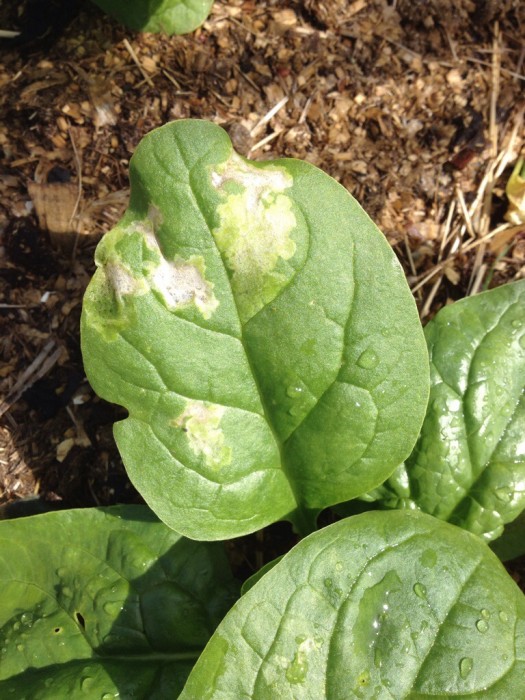
Our spinach is coming up and it looks all right, except for the leaf miner spots.

20140602-085334-32014384.jpg

And I’m guessing our broccoli currently resides in the bellies of some happy woodland rodents.

20140602-085404-32044140.jpg


It’s enough to make anyone contrary.

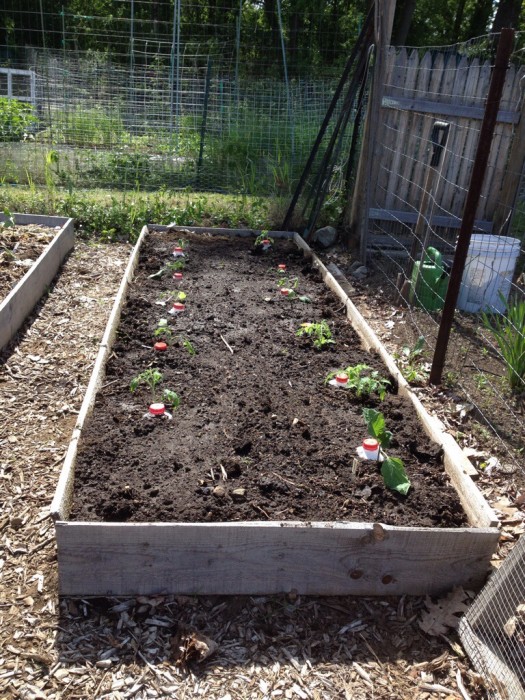
In some good news, we got the tomato plants situated the way I want.  We’re trying out “ollas” for the tomatoes.  They are not real ollas, which are unglazed clay pots that you bury near your plants and fill with water to provide irrigation.  We’re using a half-gallon milk jug for each tomato plant.  I’ve punch four needle-sized holes into the side closest to the tomatoes, and buried them alongside the tomato plant.

20140602-085415-32055682.jpg

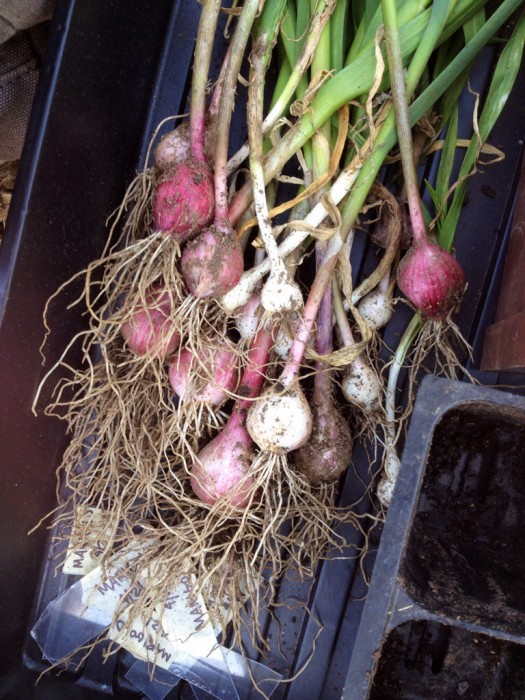
It looks nice and neat when you’re in the garden, all those little red caps in a row.  We set out 12 tomato plants total this year, cutting back from last year’s 35 — we’ll make up the difference with tomatoes from Seth’s work.  We also put in 5 eggplants, and pulled up enough spring garlic to last for a few weeks.

20140602-085635-32195024.jpg

All in all, things could be a lot worse.  I’m heading to the garden tonight to put a scoop of worm castings and crushed egg shells into each milk jug.  This way, the tomatoes get a boost of fertilizer and calcium with every watering.